
Product Optimization
Optimize product performance across complex manufacturing environments
Built for high-stakes product quality, test efficiency, and performance decisions.
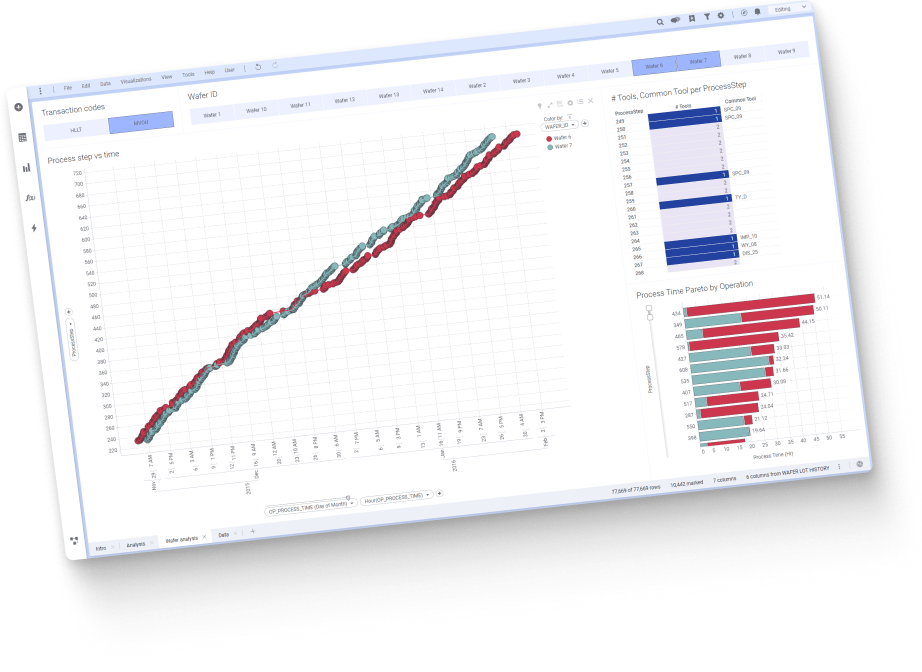
Product performance in high-tech manufacturing is shaped by complex interactions between materials, process conditions, and test environments. From wafer fabrication to final test, variation can emerge at multiple stages, influencing yield, reliability, and overall product quality.
The signals needed to understand product behavior are often distributed across test systems, process data, inspection results, and engineering analyses. These perspectives are typically reviewed separately, making it difficult to understand how variation impacts product performance and where improvements should be made.
Spotfire brings these elements together in a unified industrial analytics environment, helping teams understand how product behavior is influenced across the manufacturing system. This allows engineers to identify performance drivers, evaluate trade-offs, and improve outcomes more effectively.
Improving test yield requires understanding how product behavior varies across devices, lots, and test conditions. Small variations in process or design can have a significant impact on final yield.
Typical manufacturing scenario
Test yield varies across lots or devices, but the root causes are unclear. Engineers analyze binning results, test parameters, and process data separately, making it difficult to identify which factors are driving yield loss.
What changes with a unified environment
Spotfire brings together test results, binning data, and process conditions in a single analytical view. Engineers can correlate product performance with upstream variables, identify yield drivers, and optimize test outcomes with greater precision.
What this looks like in Spotfire
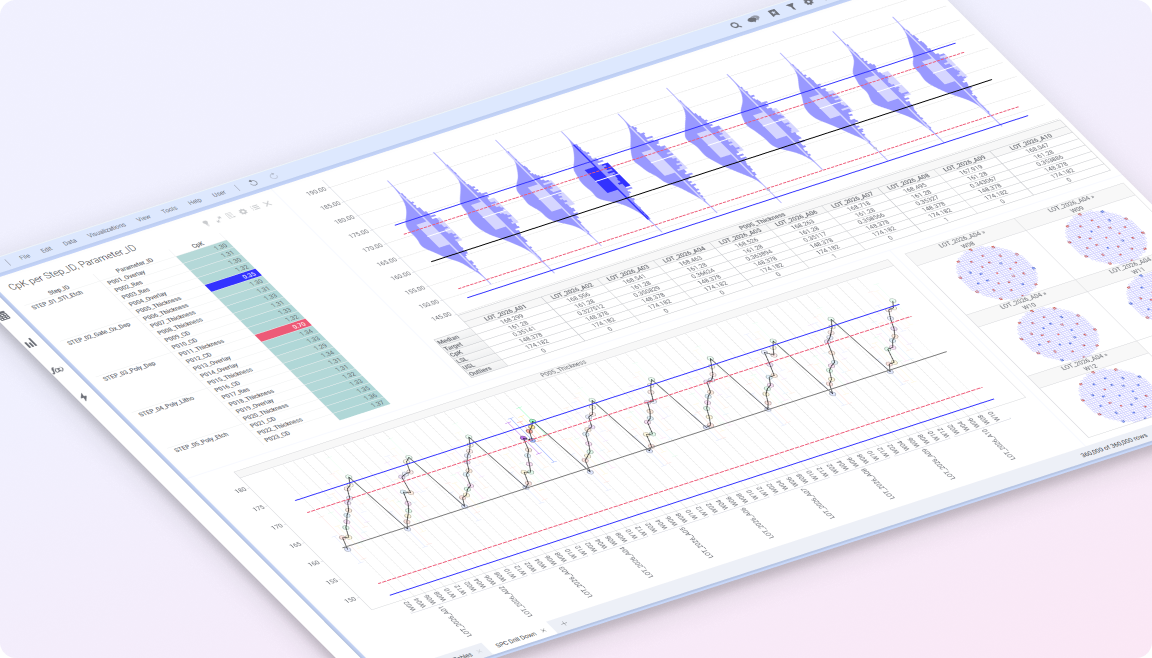
Spotting which process variable is skewing yield takes more than a mean and a spread; it takes binning results, test parameters, and process data reviewed as full distributions, not summary numbers. Violin plots with kernel density estimation in Spotfire add another angle: the full shape of the test result distribution becomes visible, so skewed or multimodal behavior tied to a process variable is easy to spot.
Test time is a critical factor in manufacturing efficiency, directly impacting throughput and cost. Reducing unnecessary test steps without compromising quality requires a deep understanding of product behavior.
Typical manufacturing scenario
Test programs include conservative margins and redundant steps to ensure quality. Engineers lack clear visibility into which tests provide value, leading to longer test cycles and increased production costs.
What changes with a unified environment
Spotfire enables teams to analyze test results, identify redundant or low-value tests, and evaluate trade-offs between test coverage and efficiency. This helps reduce test time while maintaining confidence in product quality.
What this looks like in Spotfire
Deciding which test steps are pulling their weight isn't a call made from a summary statistic alone; it's a side-by-side review of raw test results, defect coverage, and process context. Show-all-data-points box plots in Spotfire add the missing layer: raw test points sit alongside the statistical summary, making it clear which test steps add defect coverage and which don't.
Understanding product failures requires investigating relationships between design, process conditions, and test outcomes across multiple datasets.
Typical manufacturing scenario
Failure patterns are identified in test data, but root causes remain unclear. Engineers must manually correlate failure modes with process data, inspection results, and historical analyses across multiple tools.
What changes with a unified environment
Spotfire enables engineers to explore failure modes alongside process conditions and test results in a single analytical context. Teams can identify patterns, correlate failure drivers, and accelerate root-cause analysis, improving product reliability and reducing time to resolution.
What this looks like in Spotfire
Tracing a failure back to its origin needs more than one failure number, it needs that failure rate to hold up consistently across the lot, wafer, and die levels at once. Nested aggregations in Reference Layers keep that consistent: a failure reference line rolls up correctly across the lot, wafer, and die hierarchy instead of averaging flatly across all levels.
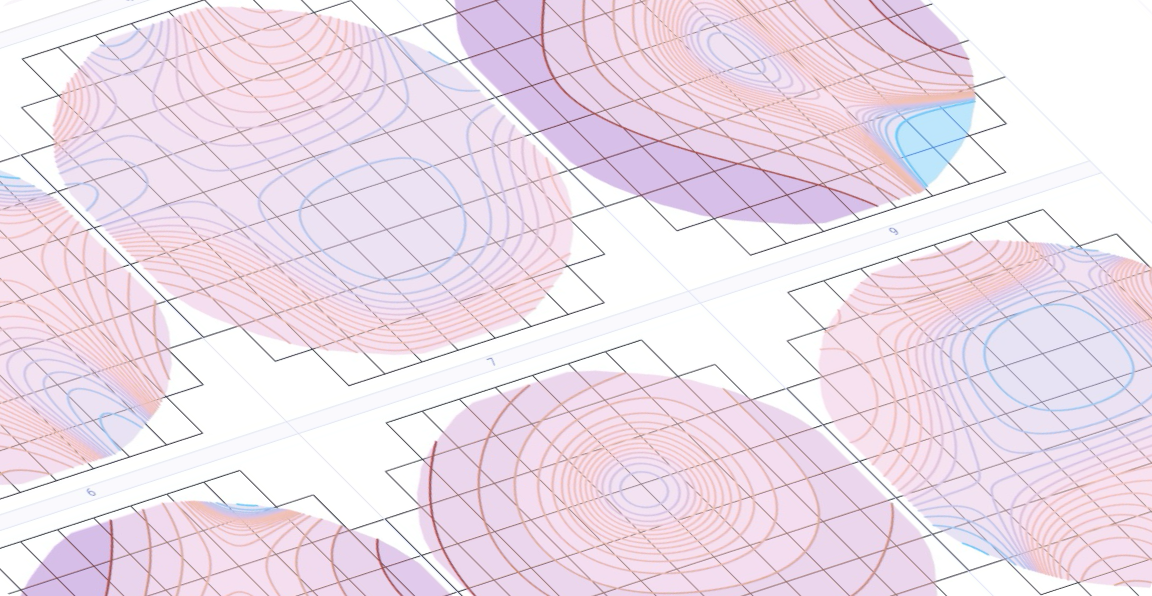
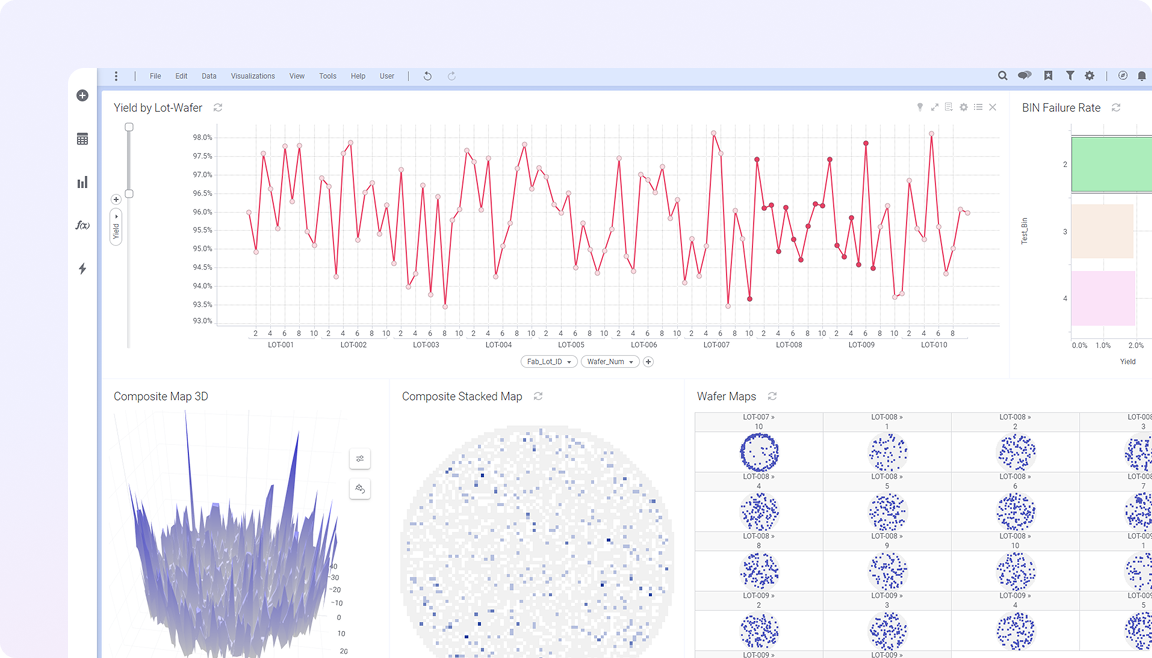
Spotfire builds on the systems manufacturing teams already rely on, bringing product, test, and process data into a shared analytical context. By enabling engineers to explore product behavior, test outcomes, and performance drivers together in a single decision layer, Spotfire helps improve yield, reduce test inefficiencies, and deliver more consistent product quality at scale.

Identify performance issues faster with Spotfire
Turn complex manufacturing data into better product performance
Explore how high-tech manufacturers use Spotfire Industry Pro to analyze data across the product lifecycle, uncover hidden correlations, and resolve performance issues faster, improving reliability, reducing defects, and accelerating time to market.