
Operational Excellence
Operational excellence across complex manufacturing environments
Built for high-stakes production performance, uptime, and operational decision-making.
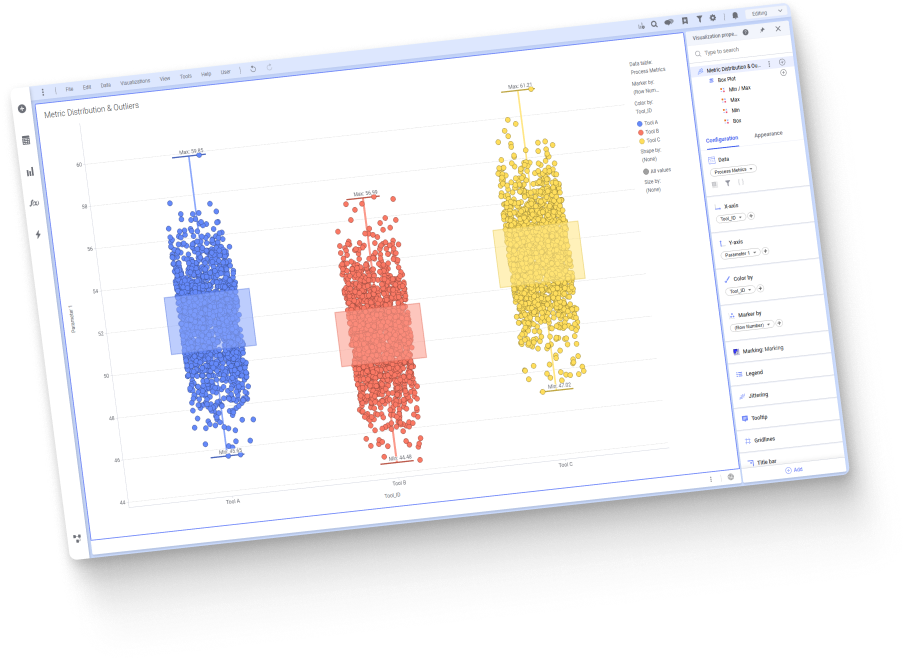
Manufacturing operations depend on tightly coordinated systems, equipment, processes, materials, and production schedules, all of which interact continuously. Even small disruptions can propagate quickly, impacting throughput, cycle time, and overall performance.
Operational signals exist across multiple domains, from equipment sensors and control systems to production metrics, maintenance records, and planning systems. These perspectives are often analyzed separately, making it difficult to understand how issues develop and where intervention is needed.
Spotfire brings these elements together in one visual industrial analytics environment, helping teams understand how operational conditions evolve across the production system and where performance, risk, and resilience are truly determined. The result is faster response, better coordination, and more stable operations.
Equipment failures rarely occur without warning. Subtle changes in sensor signals, operating conditions, or performance metrics often indicate emerging issues, but these signals are difficult to detect when analyzed in isolation.
Typical manufacturing scenario
A critical tool begins to drift from normal operating conditions. Sensor readings fluctuate, but thresholds are not yet breached. Maintenance teams rely on either scheduled servicing or reactive alerts, resulting in unexpected downtime when issues escalate.
What changes with a unified environment
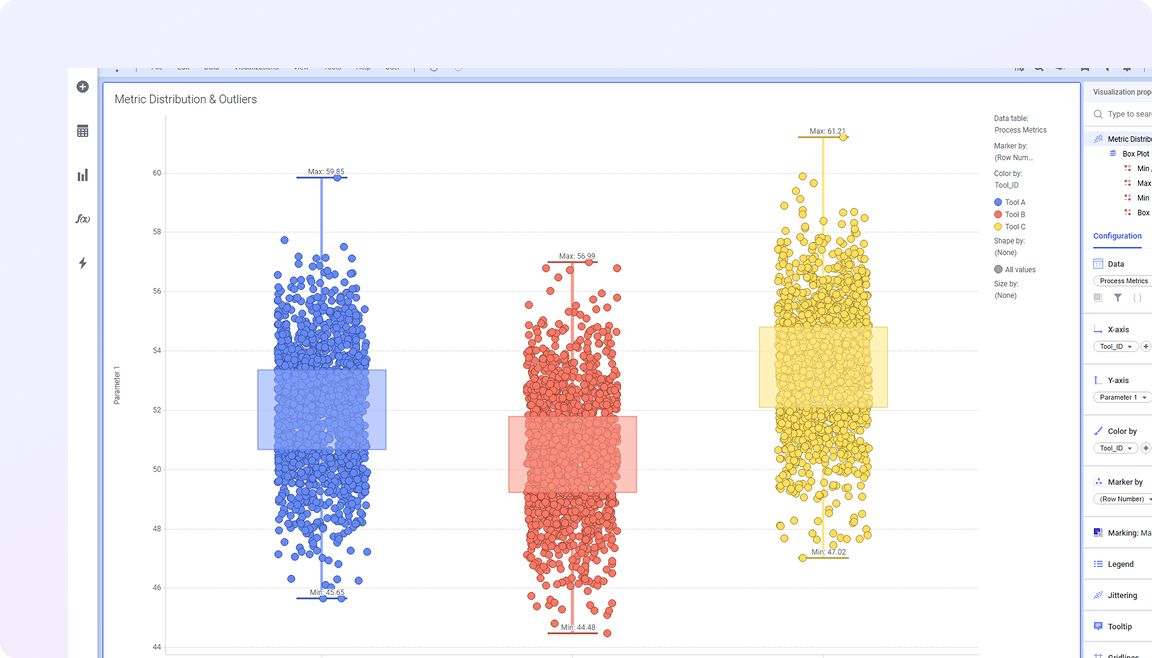
Spotfire brings together sensor data, equipment history, and operational context in a single analytical view. Teams can detect anomalies earlier, identify patterns associated with failure modes, and prioritize maintenance based on actual equipment behavior, reducing unplanned downtime and improving asset reliability.
What this looks like in Spotfire
Catching a failure pattern before it escalates isn't down to one algorithm watching one signal; it takes sensor data, equipment history, and operational context reviewed as a whole. Insight Agents in Spotfire Industry Pro handle one part of that automatically: they surface anomalies and emerging failure patterns with recommended next steps, instead of relying on manual review to catch them.
Improving OEE requires understanding how availability, performance, and quality interact across production systems. However, these metrics are often tracked separately, limiting visibility into the true drivers of performance.
Typical manufacturing scenario
OEE metrics indicate performance loss, but root causes are unclear. Downtime events, minor stops, and quality issues are tracked in different systems, making it difficult to understand how they relate to one another or where to focus improvement efforts.
What changes with a unified environment
Spotfire connects production data, equipment performance, and operational events in a shared visual context. Teams can analyze OEE dynamically, identify bottlenecks, and understand how different factors contribute to performance loss, enabling more targeted and effective improvements.
What this looks like in Spotfire
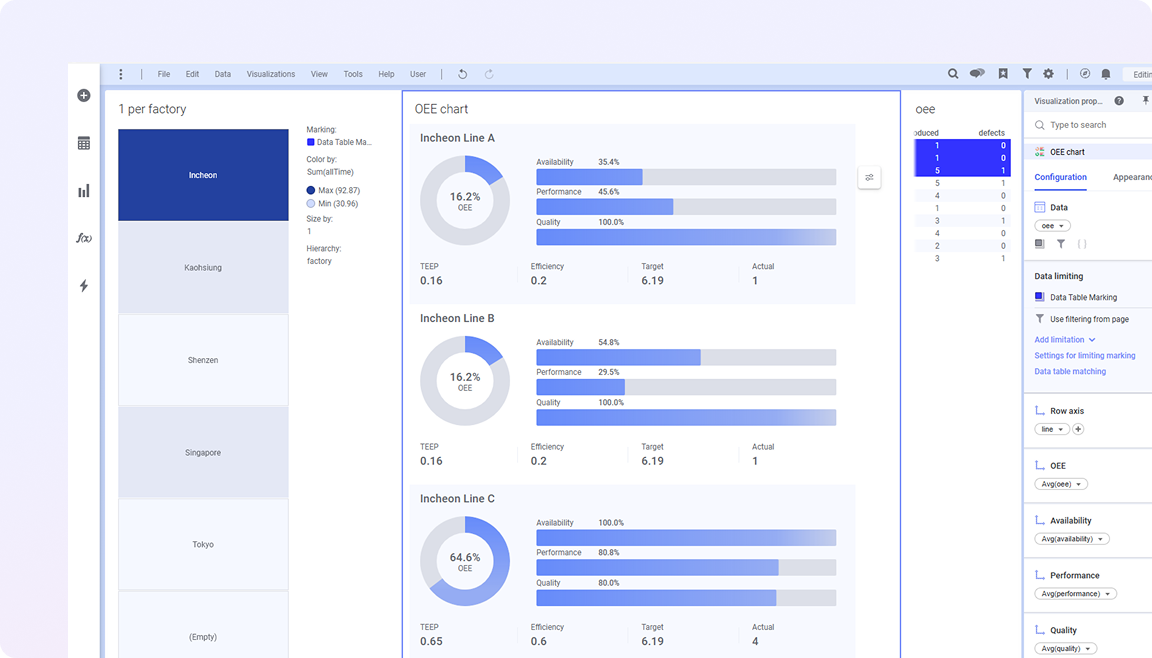
Finding the actual driver behind an OEE drop takes more than a single score; it takes availability, performance, and quality tracked together, not across separate systems. The Spotfire statistics layer earns its place directly on the line view: availability, performance, and quality components calculate and display right there, so the specific driver of a drop is visible immediately.
Operational performance depends on understanding how decisions and conditions across the production environment influence outcomes.
Typical manufacturing scenario
Production performance varies across lines, shifts, or facilities. Teams rely on static reports or isolated dashboards, making it difficult to identify trends, compare performance, or understand how operational decisions impact results.
What changes with a unified environment
Spotfire enables interactive exploration of operational data across equipment, processes, and production environments. Teams can identify trends, compare performance, and evaluate operational scenarios in real time, supporting faster, more informed decision-making across the organization.
What this looks like in Spotfire
Comparing performance across shifts and lines fairly isn't about one static report; it's about making equipment, process, and production data explorable together at full scale, not sampled down first. Push-compute on Snowflake and Databricks makes that scale possible without a workaround: cross-shift and cross-line comparisons run directly against the data platform, without moving large volumes of production data first.
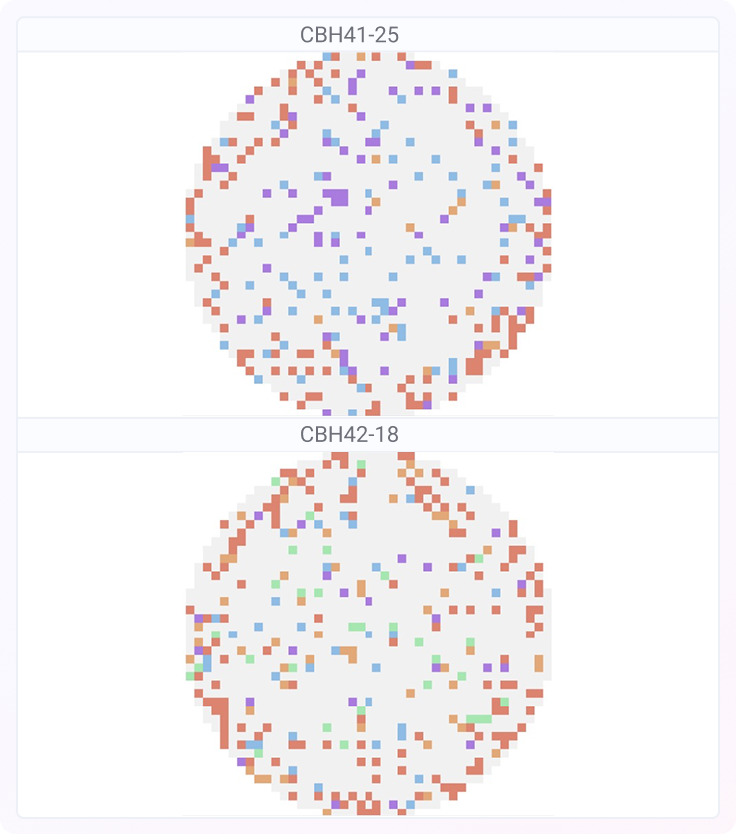
Spotfire builds on the systems manufacturing teams already rely on, bringing their data into a shared analytical context. By enabling teams to explore equipment behavior, process conditions, and operational performance together in a single decision layer, Spotfire helps improve efficiency, strengthen resilience, and respond to change with confidence, keeping production running at scale, even in complex environments.

Detect issues early, respond with confidence
Continuously monitor and respond to operational variability
Learn how continuous fault detection enables manufacturing teams to monitor real-time equipment and process signals, identify anomalies as they emerge, and take action before issues escalate, reducing downtime, improving reliability, and maintaining stable, efficient operations.
intelligence - faster, with Spotfire.