Operational Excellence
Surface operational risk before disruption
Make risks visible across systems early to maintain performance and stability.
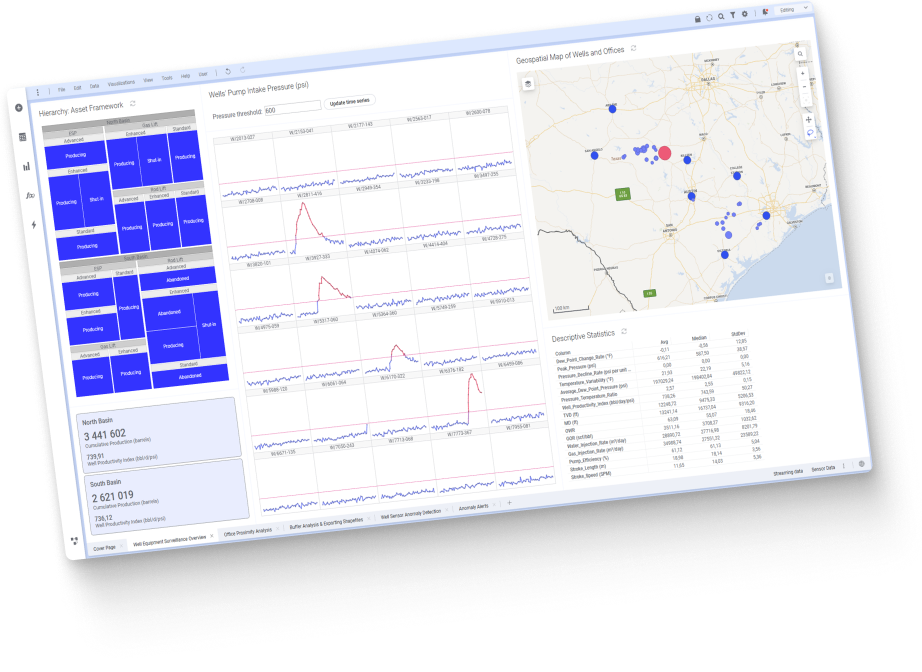
Operational excellence in upstream energy is not about reacting to failures; it’s about anticipating them. Production systems span wells, facilities, gathering networks, and surface infrastructure, all operating under changing conditions and constraints.
Equipment degradation, capacity limits, and operational risk often emerge gradually, with signals scattered across historians, maintenance systems, and spreadsheets. By the time issues are visible in reports, disruption has already occurred.
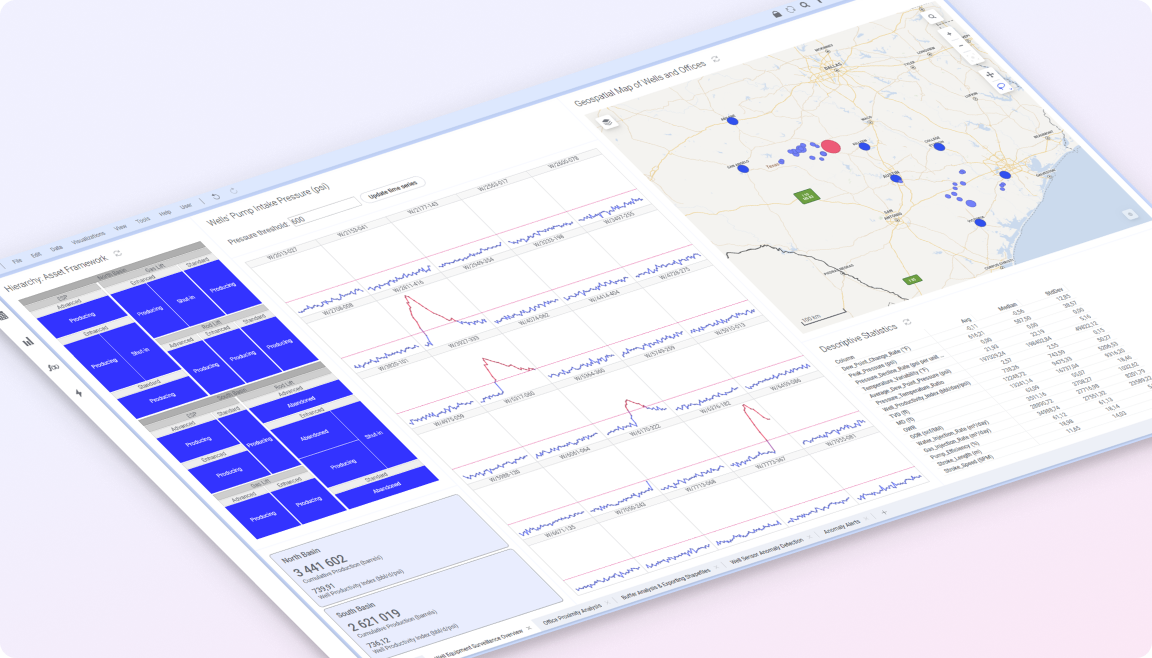
Spotfire supports integrated operational workflows by bringing condition, performance, and capacity insight together in one visual environment, enabling teams to see risk forming, align responses earlier, and sustain reliable production.
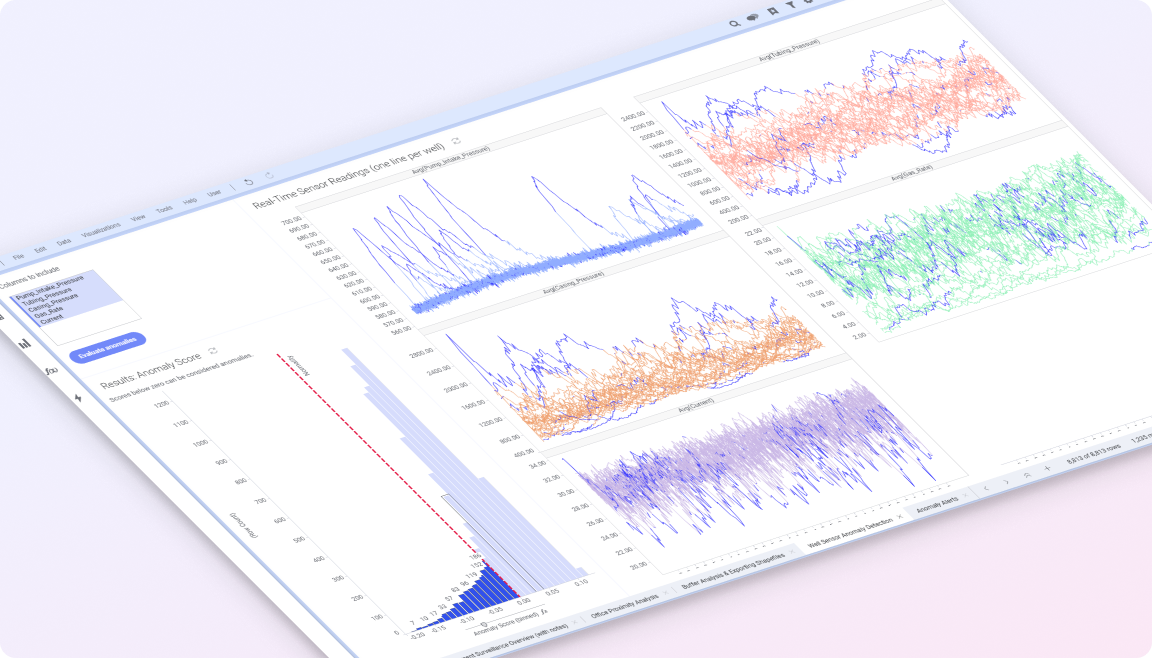
Balancing production forecasts against facility and network capacity requires understanding how wells, equipment, and infrastructure interact over time. Spotfire helps teams see where constraints will emerge, assess risk earlier, and adjust plans before production is impacted.
Typical upstream scenario
Production plans are developed based on well forecasts, while facility and network capacity constraints are managed separately. As conditions change, misalignment can lead to bottlenecks, deferrals, or operational risk.
What changes with a unified environment
Spotfire visually brings production forecasts, capacity limits, equipment condition, and spatial context together. Teams can see where constraints are forming, understand their impact earlier, and adjust operating or development plans before disruptions occur.
What this looks like in Spotfire
Catching a bottleneck early depends on seeing the forecast, and the constraint in one continuous picture, not on a live feed by itself. In Spotfire, the native AVEVA PI connector pulls live historian data straight into the forecast-versus-capacity view, right where equipment condition and spatial context sit too, so a bottleneck is visible before it becomes a constraint, not after.
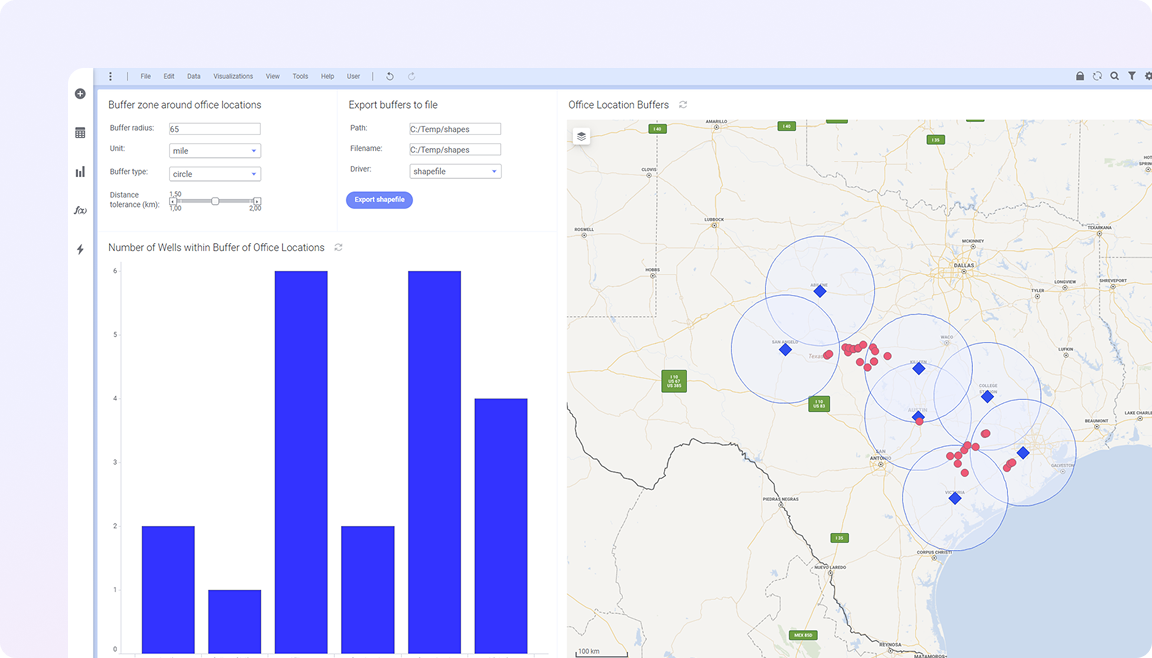
Workover decisions must weigh equipment condition, production impact, operational risk, and economics, often under time and resource constraints. Spotfire helps teams prioritize interventions by making trade-offs visible across wells and facilities.
Typical upstream scenario
Workovers compete for limited resources, and decisions are often driven by recent failures rather than system-wide impact. Equipment condition, production contribution, and economic value are not always evaluated together.
What changes with a unified environment
Spotfire enables teams to compare workover candidates in context, connecting equipment health, production impact, and economic considerations. This supports proactive prioritization, better resource allocation, and fewer reactive interventions.
What this looks like in Spotfire
Confidence in ranking wells comes from weighing degradation, risk, and economics together, not from a single score. In Spotfire, the statistics layer calculates degradation and risk metrics directly on the well trend, right where production impact and economic value are being weighed too — so ranking which wells need attention first doesn't require pulling a separate report.
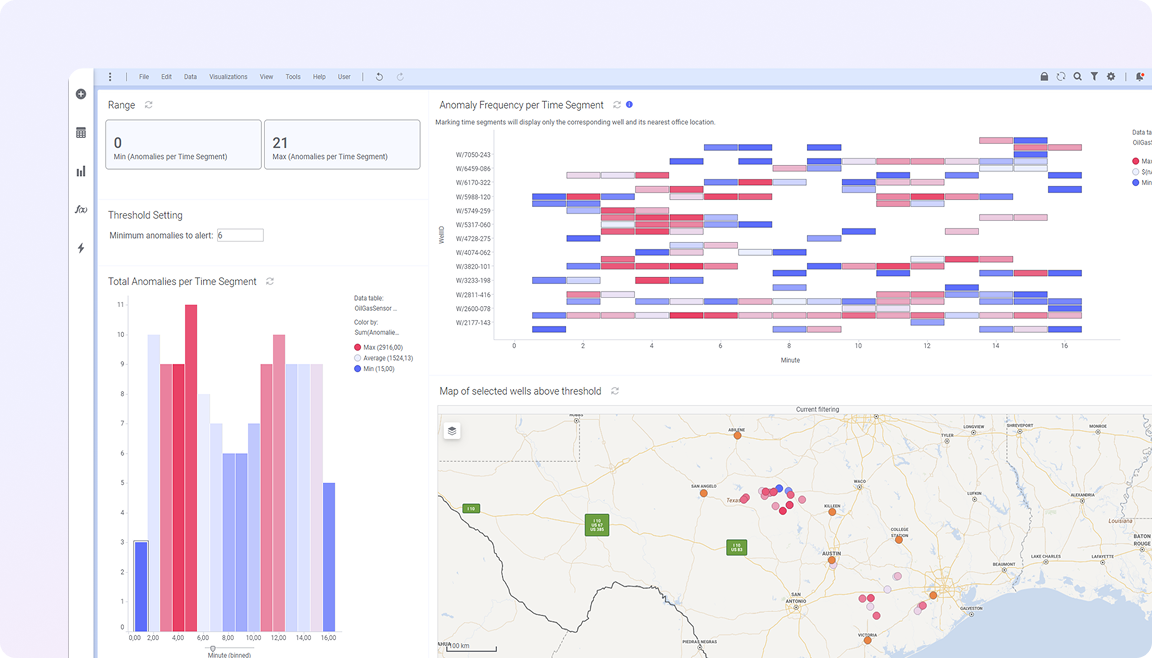

Spotfire doesn’t replace control systems or maintenance platforms. It connects and augments them. By unifying operational signals, capacity constraints, and economic impact into a single decision layer, Spotfire helps upstream teams surface risk earlier, prioritize actions more effectively, and sustain reliable production across complex operating environments.

From operational data to coordinated action
From operational data to optimized drilling performance
Discover how HMH analyzes real-time and historical data to uncover performance drivers, improve drilling execution, and continuously optimize operations, delivering more consistent performance and better operational outcomes.